Author: Prompt Gardener

  • Prompt: Create a Caricature of Me and My Job Based on Everything You Know About Me

    Prompt: Create a Caricature of Me and My Job Based on Everything You Know About Me

    This is a personal image-generation prompt with a twist.

    Instead of asking the AI to create a generic avatar, portrait, or professional headshot, you ask it to generate a caricature of you and your job based on what it already knows about you:

    Create a caricature of me and my job based on everything you know about me.

    The result is not meant to be realistic. It is meant to be revealing.

    (more…)
  • Without Recourse to Your Training Data: The Prompt That Asks an AI to Forget Itself

    Without Recourse to Your Training Data: The Prompt That Asks an AI to Forget Itself

    Some prompts add information. Others remove it. The most curious ones do something stranger still — they ask the AI to behave as if it knew less than it does.

    One small phrase, dropped at the end of almost any request, has quietly become a favorite among careful prompters:

    without recourse to your training data

    On paper, it should not work. A language model is its training data. Every token it generates is a probabilistic echo of the texts it once absorbed. Asking it to answer “without” them is, in the strict sense, impossible.

    And yet — the output changes. Often for the better.

    (more…)
  • PDF Tasks with ChatGPT or Gemini: A Practical Alternative to Classic PDF Tools

    PDF Tasks with ChatGPT or Gemini: A Practical Alternative to Classic PDF Tools

    For a long time, even small PDF tasks felt more complicated than they needed to be.

    You wanted to merge two files, extract a few pages, rotate one scan, remove a blank page or create a clean version of a document — and suddenly you had to open Adobe Acrobat, use PDF24 or search for an online PDF tool.

    Those tools are still useful. Adobe Acrobat remains the professional standard for many advanced PDF workflows. PDF24 is a very practical option for quick everyday PDF jobs. But there is now another way to handle many standard PDF tasks:

    You can simply ask an AI assistant.

    (more…)
  • The Fear Map Prompt: How to See the Futures We Refuse to Choose

    The Fear Map Prompt: How to See the Futures We Refuse to Choose

    Some prompts ask artificial intelligence to generate answers. Better prompts ask it to reveal structures. The best prompts change the way we look at a problem.

    This is one of those prompts:

    Create a map of possible futures that could emerge from this decision, but label each path with the specific fear that prevents humans from choosing it.

    At first glance, it looks like a scenario-planning prompt. You give the AI a decision, and it produces several possible futures. But the real power lies in the second half: each path is not only described by its outcome, but by the fear that blocks people from taking it.

    (more…)
  • 1000prompts.net: A Thousand Small Doors into AI

    1000prompts.net: A Thousand Small Doors into AI

    Artificial intelligence is often explained through its biggest promises: productivity, automation, efficiency, new business models. All of that is true. But it sometimes misses the more interesting point: AI does not only change how we work. It also changes how we ask.

    That is where 1000prompts.net begins.

    At first glance, the project is a collection of prompts: short inputs designed to make an AI generate an answer, an idea, an analysis, or an image. But 1000prompts.net is more than a list of useful commands. It is a small laboratory for the emerging culture of conversation between humans and machines.

    A prompt is never just an instruction. It is a way of thinking.

    (more…)
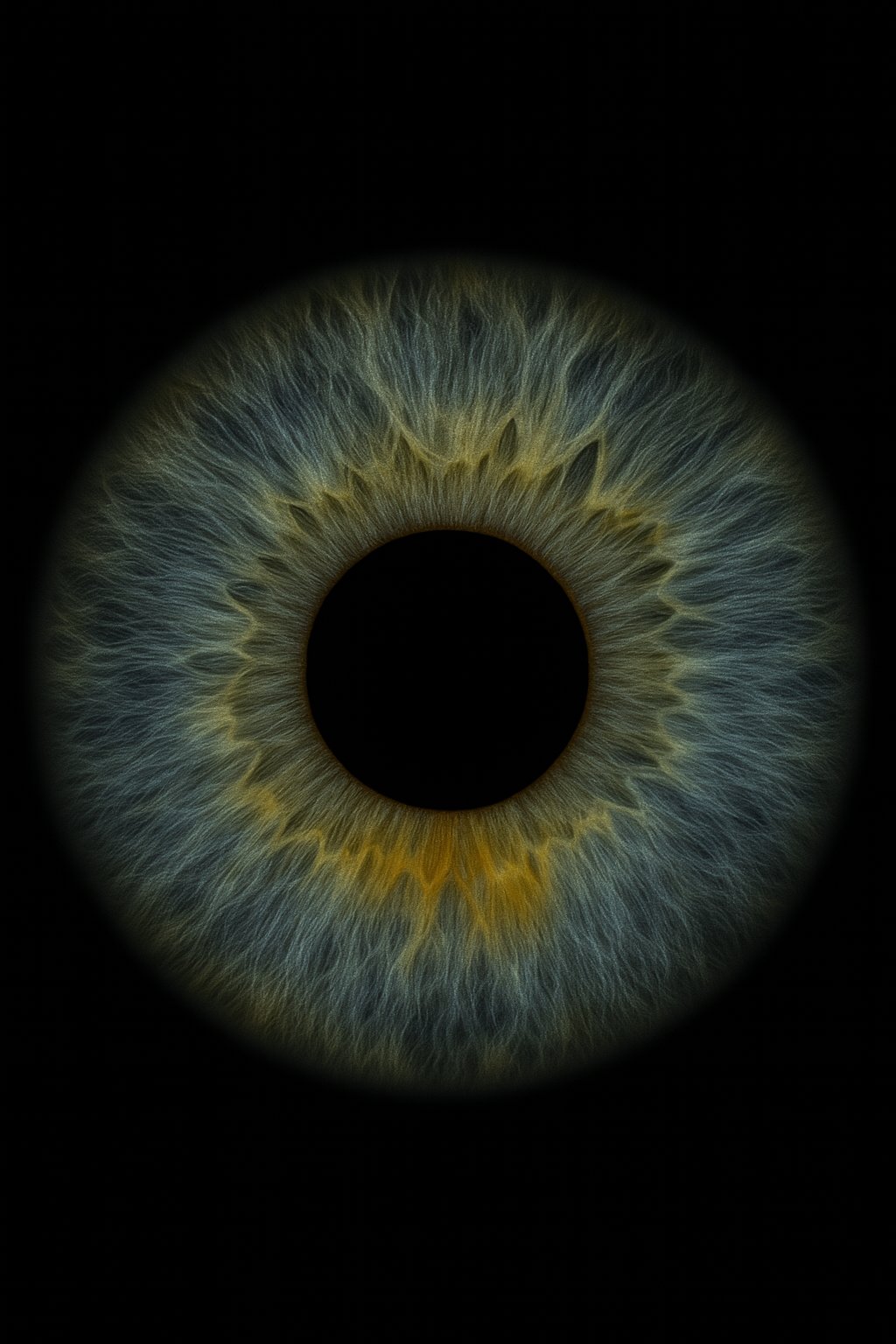
  • Turn Your Iris Into Art: A Simple Prompt for a Striking AI Macro Image

    Turn Your Iris Into Art: A Simple Prompt for a Striking AI Macro Image

    Sometimes the best AI prompts do not begin with a grand idea. They begin with a small detail.

    A face. A reflection. A texture. A color you have never really noticed before.

    One of the most fascinating examples is the human iris. We see eyes every day, but rarely do we look at them as landscapes. Up close, an iris can resemble a nebula, a flower, a mineral structure, a solar eclipse, or a tiny organic universe. It is personal, but also abstract. Familiar, but strangely alien.

    That makes it a perfect subject for an AI-assisted image experiment.

    The idea is simple: take a clear photograph of your eye, upload it to ChatGPT, and ask it to transform the iris into a high-resolution macro image. The result can be surprisingly beautiful — not a portrait, not a selfie, but a hyper-detailed visual study of color, structure, and light.

    (more…)